

Where Proof Is Made
Research & Innovation
Applied research, interdisciplinary collaboration, and knowledge translation for real-world impact.
Discovery Drives Everything
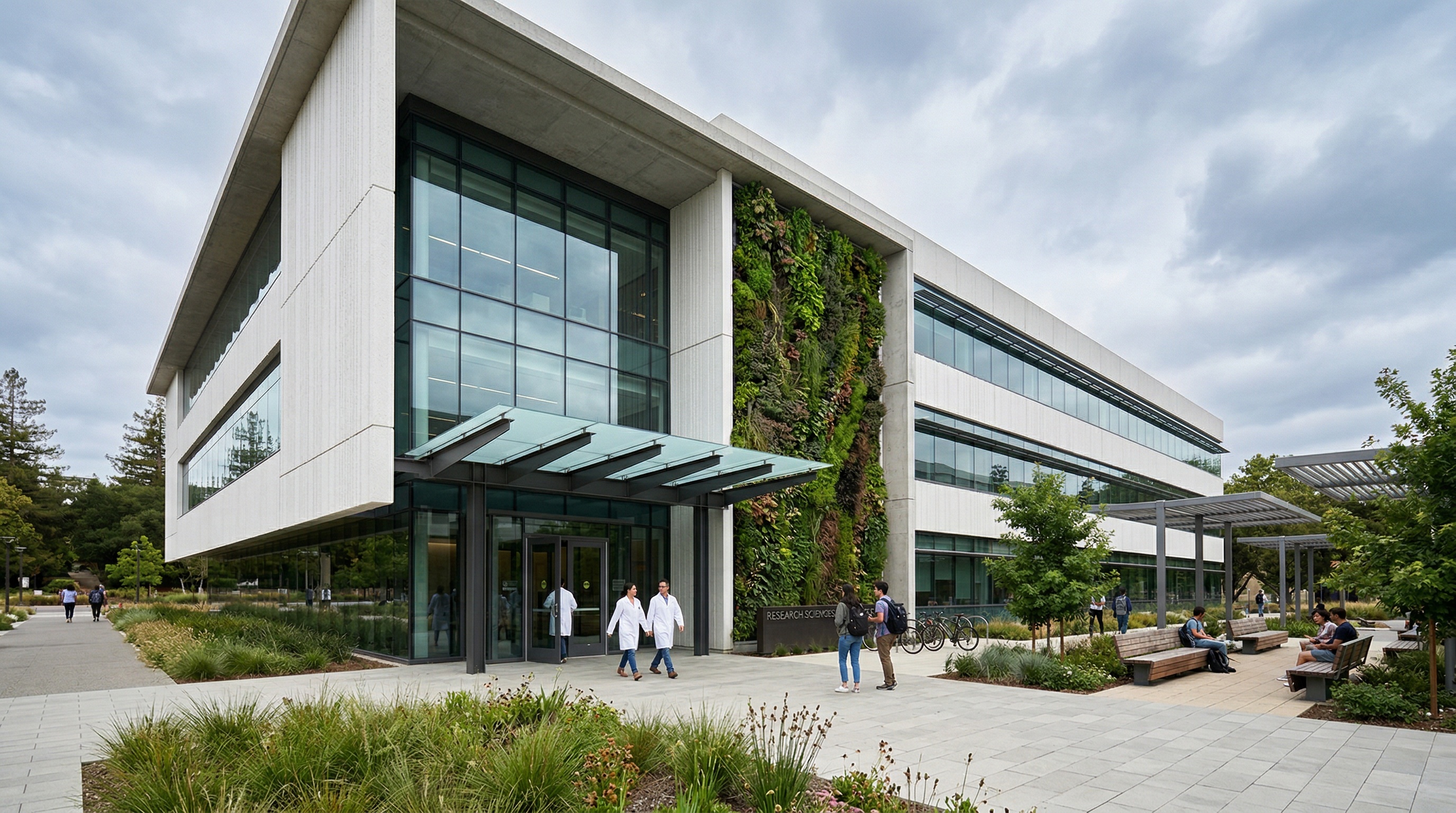
Zaag University's research philosophy is grounded in applied inquiry, interdisciplinary collaboration, and public benefit. Research activity is intended to connect students, faculty, industry, community partners, and institutional priorities through projects that address practical challenges in health, emergency management, technology, sustainability, public policy, education, design, and social innovation.
Zaag's nine research centres are organised around problems rather than departments — a structural choice that positions each centre as a genuine cross-disciplinary enterprise rather than a faculty sub-unit with a different name. The Emergency Medicine Research Centre draws on paramedicine, clinical science, health policy, and technology. The AI & Applied Technology Institute engages engineers, ethicists, and domain specialists in parallel.
Flagship Research Projects
High-impact initiatives addressing the world's most urgent challenges.
Emergency Medicine Research Centre
The Emergency Medicine Research Centre is the research home of the B.EMS programme and the institutional anchor for Zaag's work in paramedicine, emergency systems, and pre-hospital care. Research priorities include scope-of-practice expansion for advanced care paramedics, rural and remote emergency response models, and VR/MR simulation efficacy for clinical training. The centre works in direct collaboration with emergency medicine practitioners and health system partners, ensuring that research outputs connect to practice change.
Indigenous Health & Community Research Institute
Established with OCAP® principles embedded in its governance framework and UNDRIP referenced in its mandate, the Indigenous Health & Community Research Institute is designed to be led by and accountable to Indigenous communities rather than simply serving them as research subjects. Community members hold full decision-making authority on the Institute's governance committee. Research priorities are set in partnership with Indigenous communities and reviewed against TRC Calls to Action. The Institute does not engage in research that communities have not sanctioned under OCAP® principles.
AI & Applied Technology Institute
The AI & Applied Technology Institute brings together computer scientists, engineers, ethicists, and domain specialists to work on applied AI problems with real-world stakes — health diagnostics, emergency dispatch optimisation, policy analysis, and educational technology. The Institute's governance includes representation from affected communities alongside technical researchers, reflecting Zaag's conviction that applied AI research is inseparable from the human and social contexts in which it operates. NSERC and ORF are engaged as prospective funding partners.
Research Centres & Institutes
Interdisciplinary hubs tackling the world's most pressing challenges.
Emergency Medicine Research Centre
Focused on pre-hospital care, paramedic science, and emergency systems research. The centre supports the Bachelor of Emergency Medicine programme and the M.Sc.EM and PhD.EM graduate streams. Research priorities include EMS system design, clinical protocol development, and VR/MR simulation effectiveness in paramedic training.
AI & Applied Technology Institute
Research at the intersection of artificial intelligence, applied computing, and real-world deployment. The Institute supports M.Sc.CS, M.Sc.AITech, and PhD.AITech programmes. Research priorities include responsible AI, machine learning in clinical settings, and AI governance frameworks relevant to Canadian regulatory contexts.
Health Sciences Research Centre
Broad-scope health sciences research spanning nursing, public health, and allied health disciplines. The centre supports B.Sc.N, B.H.Admin, and M.Sc.MedInn programmes, with research priorities in healthcare systems, nursing practice innovation, and health outcomes measurement.
Indigenous Health & Community Research Institute
All research at this Institute is conducted under OCAP® principles — Ownership, Control, Access, and Possession — with Indigenous communities as partners and decision-makers, not subjects. Research priorities include Indigenous health equity, community-led wellness models, and the application of UNDRIP in health policy. Indigenous advisors hold full voting rights on the Institute's Programme Advisory Committee.
Policy & Leadership Research Centre
Applied policy research in the areas of emergency management, public health policy, education policy, and institutional governance. The centre is designed to produce outputs that are usable — policy briefs, regulatory frameworks, and governance models — not only peer-reviewed publications.
Environmental & Applied Sciences Research Centre
Research spanning environmental monitoring, applied ecology, climate science, and sustainability. The centre supports B.Sc.Env and B.Sc.LifeSci programme development and is funded in part through the Ontario Research Fund. Research priorities include environmental systems across the Quinte region and eastern Ontario, and applied climate adaptation strategies.
Biomedical Research Institute
Focused on biomedical engineering, medical device innovation, and translational research connecting laboratory findings to clinical application. The Institute supports B.Eng.BME and M.Sc.MedInn streams. Research priorities include assistive technologies, biosensors, and point-of-care diagnostic systems.
Culinary & Applied Food Sciences Centre
Research into food systems, culinary science, and applied nutrition. The centre supports the Faculty of Applied & Technical Skills and is unique among Canadian university research centres in treating culinary practice as a subject of serious applied inquiry. Research priorities include food security, sustainable sourcing, and culinary innovation.
Interdisciplinary Research Institute
A home for research that does not fit neatly within a single centre. The Institute supports projects that span multiple faculties and research domains — including the B.IHS, B.AIH, and M.Sc.AIH programmes. It is designed to be the most flexible research structure at Zaag, built to move quickly on emerging questions.
"The research centre structure is the thing that most surprised me when I joined the faculty. These aren't nominal groupings — the Emergency Medicine Research Centre has real governance, real research priorities that came from the community, and a relationship with the B.EMS programme that means students engage with actual research questions, not manufactured case studies. That coherence is rare."
Dr. Fatima Al-Rashidi — Founding Faculty, Faculty of Medicine & Allied Health Disciplines
Research Centres
Programmes Planned
Endowment
Faculties
Research Partners
Collaborating with world-leading organisations to advance knowledge.
Natural Sciences and Engineering Research Council (NSERC)
Canadian Institutes of Health Research (CIHR)
Social Sciences and Humanities Research Council (SSHRC)
Ontario Research Fund (ORF)
MaRS Discovery District
Indigenous Community Research Partners
Research Opportunities
From first-year undergraduates to doctoral candidates, every student can engage in research.
-
Undergraduate Research Assistantships available from first year with faculty mentorship.
-
Graduate research fellowships with full tuition and stipend support.
-
Summer research intensive programs for students across all faculties.
-
Industry-sponsored projects and patent support for applied research.

Research Philosophy
Zaag University's research philosophy is grounded in applied inquiry, interdisciplinary collaboration, and public benefit. Research activity is intended to connect students, faculty, industry, community partners, and institutional priorities through projects that address practical challenges in health, emergency management, technology, sustainability, public policy, education, design, and social innovation.
Focus Areas
- Health sciences and emergency medicine
- AI, digital systems, and applied technology
- sustainability and smart communities
- public policy and governance
- simulation, education, and experiential learning
Partner with Us
Zaag University welcomes future conversations with academic partners, public agencies, community organizations, industry collaborators, and research-focused institutions. Partnership opportunities may include applied research projects, pilot programs, student research experiences, innovation challenges, advisory relationships, and knowledge translation initiatives. Interested partners may contact research@uzaag.com or partnerships@uzaag.com.